The struggle for justice is common to women around the world
Travel grants are a unique programme for women’s movement activists in Ukraine. With the support of the Government of Canada, representatives of feminist NGOs can attend seminars, conferences and other important events to promote gender equality in Ukraine and advance the agenda of the Ukrainian women’s/feminist movement in the international context.

International exchange strengthens the work to protect women from SGBV in Ukraine, says Khrystyna Kit.
Khrystyna Kit is an attorney-at-law and the Head of the Ukrainian Women Lawyers Association “JurFem”. Khrystyna has devoted many years of her professional practice to fighting for justice and defending women’s rights. Together with her colleagues from JurFem, they have long been working in the field of protection of women from GBV and understand the specifics of providing assistance to victims, victim-centred approaches and the peculiarities of investigating relevant crimes. Unfortunately, in today’s world, sexual violence still exists as a form of warfare. The Russian army continues to commit such crimes on the territory of Ukraine, and many Ukrainian women and men need help. Since 2022, Khrystyna has been working to develop state mechanisms to protect women from SCCR. She coordinates the expert group on conflict-related sexual violence at the Office of the Prosecutor General and co-coordinates the subgroup on Access to Justice and Accountability of the Interagency Working Group on CRSV.
Work to protect women from CRSV includes addressing the consequences of the crimes committed: assisting victims and bringing perpetrators to justice. It is useful for Ukrainians to learn from the experience of other countries that have experienced armed conflicts, especially with regard to reparations systems for victims. Another focus of work in the area of protecting women from SGBV is to help prevent such cases, and the whole world should be united in developing such policies. Colombia, in particular, is currently actively working to address the challenges of combating SGBV, as the country is experiencing an armed conflict that affects civilian women. In October 2023, Bogotá, the capital of Colombia, hosted a conference entitled “Preventing Sexual Violence as a War Crime – Guarantees of Non-Recurrence”. The event was intended to bring together international experts to share the latest achievements and experiences, identify problems in the prevention of sexual violence and challenges in implementing guarantees of non-recurrence.
Khrystyna Kit wanted to attend this specialised event and did so by taking advantage of a travel grant for activists and representatives of women’s/feminist organisations within the framework of the Women’s Voice and Leadership – Ukraine Project. The grant competition is aimed at supporting activists who want to participate in an international event or visit an organisation abroad to share their experience and update Ukrainian achievements and challenges in the overall feminist movement.
For Ukraine, it is valuable to study Colombia’s experience in developing a reparations system and establishing and operating a register of victims

Khrystyna Kit attended the conference to learn from international experience and to update the Ukrainian agenda on protecting women from CRSV from the perspective of a women’s human rights NGO. Ukraine was also represented at the event by Olena Sotnyk, Advisor to the Vice Prime Minister for European and Euro-Atlantic Integration, and Anatoliy Dosych, Advisor to the Government Commissioner for Gender Policy. During the trip, the Ukrainian team did a great deal of diplomatic work, establishing contacts with representatives of the Colombian authorities and civil society. A special task was to establish partnerships to organise a study visit of the Ukrainian delegation on reparations. To this end, the participants met with the Unit for Comprehensive Assistance and Reparation to Victims in Colombia and with judges of the Court of Special Jurisdiction for Peace. The Ukrainian delegation also met with the Ambassador of Canada to Colombia, representatives of European and South American embassies, and representatives of the Unit for the Search for Persons Reported as Disappeared. Although the justice systems and contexts of war in our countries are different, it was very useful for the participants to learn about the work of their colleagues, as we can learn from each other’s experience in assisting victims, advocating for women’s rights, and analysing successful and less successful practices. In particular, Ms Khrystyna noted that in Colombia, the courts have separate protocols and policies for handling sexual violence cases.
“It is very valuable for Ukraine to study Colombia’s experience in developing a reparations system and creating and maintaining a register of victims. It has a powerful centre for victims with a wide regional representation,” the expert emphasises.
Khrystyna also met with representatives of NGOs from Colombia, Chile and Ecuador. Although the teams’ challenges were different and the South American side’s awareness of the war in Ukraine was low, this interaction allowed them to build bridges of understanding. Most importantly, the meeting showed that women on different continents have common problems and should unite to work together to achieve the goal that everyone wants – justice for women and the prevention of further violence.
“After sharing our experience, we realised together with Colombian women’s organisations that, in fact, despite different cultures and the context of war, we were working with the same challenges and violations of women’s rights, we were actually doing identical work, but each in our own country, and we have a lot to learn from each other,” Khrystyna shares her conclusions.

To win, we need international support and understanding
During her visit to Colombia, Khrystyna realised that it is important to share her experience and learn how women’s organisations work abroad. Women in one country can use their voices at the national level to speak about the needs of women in another. In this way, societies in different parts of the world have more information to support them, including Ukrainian women. The systematic use of sexual violence by the Russian military as a weapon against Ukrainian women then becomes a problem not only for Ukraine, but a violation of women’s rights in general – an international problem. Violation of international law is a matter for every country, so we will have many allies ready to fight for justice. When we don’t know about each other, it localises problems. The expert is convinced that the Ukrainian women’s movement and society in general lose a lot by not talking about themselves and not learning about others: to win, we need international support and understanding, and they are only possible when representatives of other countries are well informed. Communication with the international women’s movement is very important. Understanding that there are colleagues around the world who are also working for justice and protection of women gives a sense of support that helps us move forward.
“When you see colleagues who are ready to unite for the rights of women and girls around the world, it gives you strength, inspiration and a feeling that you are not alone in defending the rights of Ukrainian women who are being violated by the Russian military. The human rights movement is aware of this, and women’s organisations from other countries can be our voices on those international platforms where we sometimes cannot be,” emphasises the importance of visibility, according to Khrystyna Kit.
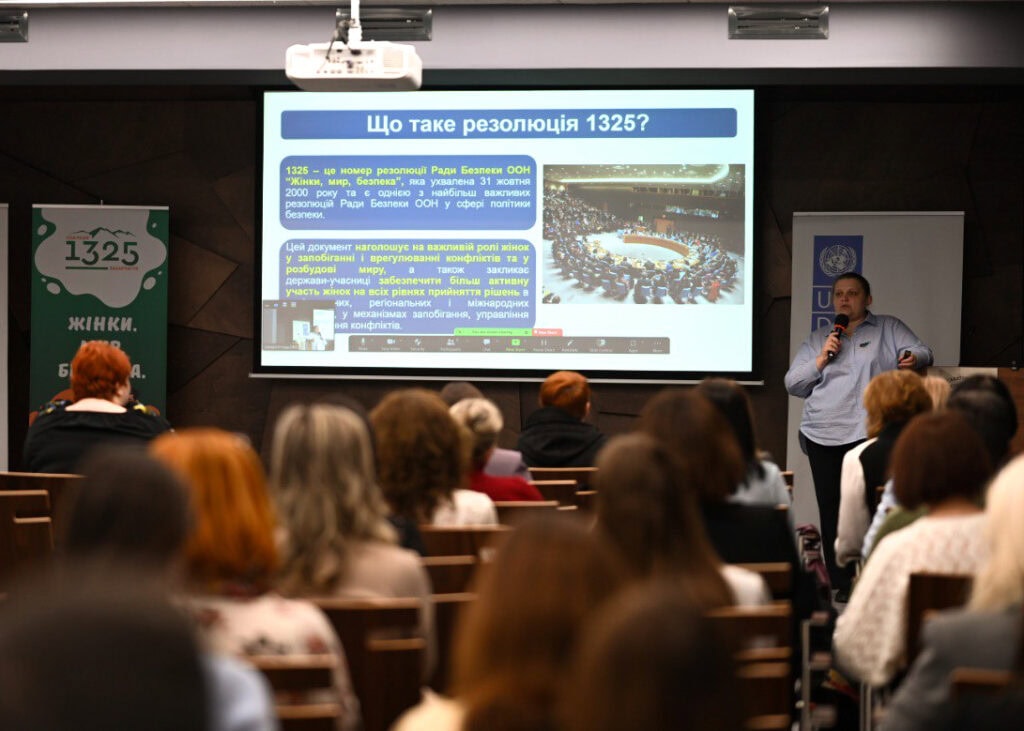
The experience gained by the lawyer has already come in handy at the discussion panel “Partnership and Cooperation in Implementing the Women, Peace and Security Agenda in Ukraine”, which was held in Kyiv thanks to a consortium of many women’s organisations, including the Ukrainian Women’s Fund and the Ukrainian Women Lawyers Association “YurFem”. The event was attended by more than 150 representatives of 19 regional 1325 coalitions in Ukraine, and all of them had the opportunity to learn about Ms Khrystyna’s findings and information about Colombian practices. Khrystyna Kit also disseminates the knowledge she has gained about creating a reparations system and international experience with the topic of SARS through the organisation of relevant training for activists. Such activities on legal issues, advocacy and effective cooperation to help survivors of sexual violence strengthen the women’s movement as a whole and have a direct positive impact on the lives of women in Ukraine.
Recalling her trip to Colombia today, Khrystyna Kit believes that the most important thing is that this experience expanded her thinking, and she can look at certain tasks and challenges differently in her work. She is convinced that in order to create an effective system for protecting women from SGBV in Ukraine, two areas need to be addressed: developing relevant documents and a system of reparations payments, and overcoming stereotypes in society so that at no stage in the creation and consideration of such cases are there any prejudices against victims. And since the influence of the international community remains an important part of achieving justice and condemning crimes, it is worth strengthening the participation of Ukrainian women in international platforms. Such interaction facilitates the exchange of successful practices, the development of experts and builds an intercontinental network of active women, where each expert works for women in her country, and all of them together for a more humane, just and secure world.
“Such visits are necessary not only to tell the world more about Ukraine, but also to gain support and cooperation with women’s organisations around the world,” concludes Christina Keith.