
About NAP 1325


What is Resolution 1325
and why is it important
UN Security Council Resolution 1325 on Women, Peace, and Security, adopted on October 31, 2000, was the first international initiative to recognize the important role of women in conflict prevention, peacebuilding, and post-conflict recovery.
It calls for ensuring women's equal participation in decision-making processes, protecting their rights during conflicts, and taking gender aspects into account in peacebuilding efforts.
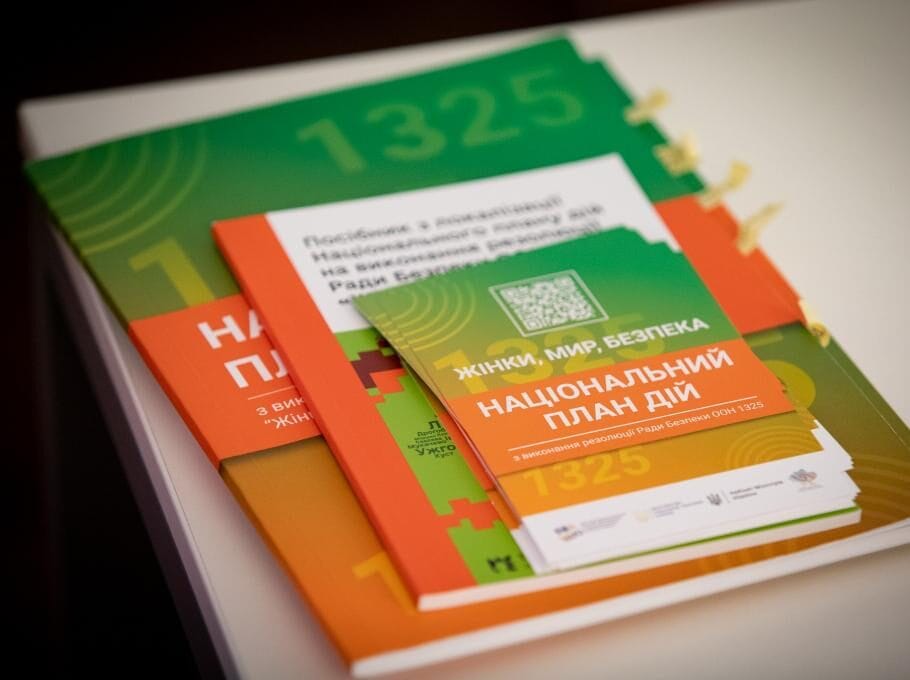
The National Action Plan 1325
is a framework document that defines state policy in the areas of security, human rights, and gender equality
in conflict and recovery situations. Its implementation is critically important at the local level, as it is communities, local governments, and regional administrations that are the first to respond to security challenges, the needs of victims, the integration of IDPs, and ensuring women’s participation in decision-making.
through the localization of the National Plan, it is possible to ensure:
-
an effective response to the needs of a specific community;
-
clear division of powers and responsibilities between authorities and implementers;
-
involvement of various sectors and the public in the implementation of equality and security policies;
-
targeted assistance in difficult conditions (e.g., in de-occupied territories or in humanitarian crises).
Strategic objectives of the National Action Plan 1325
Target groups of NAP 1325
-
Internally displaced persons
-
Residents of de-occupied and temporarily occupied territories of Ukraine, as well as territories adjacent to the line of contact,
including youth
-
Persons who have suffered material damage
as a result of military (combat) operations and shelling
-
Persons who have sustained wounds or other health impairments
in areas of military (combat) operations and/or whilst in captivity
-
Persons who have developed disabilities
as a result of wounds, concussions, injuries, or diseases sustained during the period of the Russian Federation's armed aggression against Ukraine
-
Persons who were held in captivity, forcibly displaced, or detained / persons
in respect of whom the fact of deprivation of personal liberty as a result of the armed aggression of the Russian Federation against Ukraine has been established, and their family members
-
Persons who have survived political repression,
as well as their family members
-
Persons who have been subjected to torture or subjected to forced labor
-
Survivors of conflict-related sexual violence
-
Service members and employees of the security and defense sector components
who have participated or are participating in measures to repel and deter the armed aggression of the Russian Federation against Ukraine, and who have sustained wounds, concussions, or torture, or have suffered from sexual or psychological violence, or sexual harassment
-
Service members, women and men discharged from military service, and men and women war veterans
who require support in the process of reintegration, health recovery, and the exercise of their rights
-
Family members
of service members, men and women war veterans, and persons who have died or gone missing as a result of the armed aggression of the Russian Federation against Ukraine
-
Women and men serving
or working within the security and defense sector components, law enforcement agencies, civil protection management bodies, as well as state authorities and local self-government bodies, who are involved in addressing issues of security, human rights, and post-war recovery
-
Persons belonging to vulnerable groups
in particular: persons with disabilities, the elderly, people with reduced mobility, single parents, and representatives of national minorities (communities) and indigenous peoples of Ukraine
-
Individualsof the security and defense sector components
who make decisions regarding conflict resolution, the development of social cohesion policies, and post-war recovery
-
Civil society associations
in particular women's organizations, human rights organizations, and war veterans' organizations that provide assistance to survivors of crimes related to the armed aggression of the Russian Federation against Ukraine and work on the implementation of the "Women, Peace, and Security" agenda
-
Volunteers
who provide support to persons affected by the armed aggression of the Russian Federation against Ukraine
-
Social service providers
as well as providers of socio-psychological and medico-psychological rehabilitation services, military psychologists, and specialists from mobile teams
-
Youth
in particular orphans and children deprived of parental care, as well as individuals from among them
History of the implementation of
Resolution 1325 in Ukraine


National Action Plan 2016–2020
In 2016, Ukraine approved its first National Action Plan for the implementation of Resolution 1325. This was the first step towards the systematic implementation of the Women, Peace, and Security agenda.
Among the results were the admission of female sergeants to combat positions, the opening of military lyceums for girls, and changes to legislation on equal opportunities in military service. Educational campaigns and training for civil servants were also conducted, and the system of assistance to women affected by the conflict was improved.
Systematization of efforts: National Action Plan 2020
In 2020, the second National Action Plan was adopted, detailing the strategic and operational objectives for implementing the Women, Peace, and Security agenda.
The document introduced a system of indicators for assessing progress, as well as mechanisms for interagency cooperation. Civil society organizations, local authorities, and new partnerships began to play a significant role.
After the start of full-scale war in 2022, the NAP was promptly updated to take into account new challenges and wartime conditions.
Updating in wartime: NAP 2021–2025
The updated action plan for 2021–2025 reflects the realities of war and expands its scope.
Internally displaced persons, persons released from captivity, victims of deportation, persons with disabilities, and residents of temporarily occupied territories have been added to the target groups.
The plan covers new areas such as transitional justice, community recovery, and resilience to various types of threats. Coordination between the state, communities, military administrations, and partners has been strengthened, and the monitoring and reporting system has been improved.
Integration of international standards and partnerships
The NAP 2021–2025 integrates key international documents and standards, including the Istanbul Protocol, the Rome Statute, NATO recommendations, the UN Sustainable Development Goals, and the Association Agreement with the EU. This allows for more effective implementation of Agenda 1325 in line with the global context.
In addition, annual reports and a final assessment in 2025 will make it possible to analyze progress and adapt actions to new challenges. In this way, Ukraine demonstrates consistency and flexibility in implementing the resolution even in the context of a full-scale war.